How AI is Changing Small Businesses in Nigeria



Artificial Intelligence (AI) is no longer a technology reserved for large corporations and multinational companies. Across Nigeria, small businesses are beginning to embrace AI-powered tools to improve productivity, serve customers better, and compete in an increasingly digital economy.
From online stores in Lagos to local service providers in Abuja and small businesses in Lokoja, AI is gradually becoming a practical business tool rather than a futuristic concept.
What is Artificial Intelligence?
Artificial Intelligence refers to computer systems and software that can perform tasks that usually require human intelligence. These tasks include understanding language, analyzing data, recognizing patterns, answering customer questions, and making recommendations.
Many Nigerians already use AI without even realizing it. Voice assistants, smart recommendations on social media, and automated customer support systems are all examples of AI in action.
How Nigerian Small Businesses Are Using AI
1. Customer Support and Communication
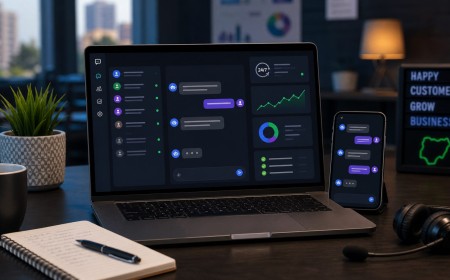
One of the biggest ways AI is helping businesses is through automated customer service.
AI-powered chat systems can answer common customer questions, provide product information, and respond to inquiries even outside business hours. This helps businesses remain responsive without hiring additional staff.
For example, an online fashion store can use AI tools to respond instantly to questions about delivery times, payment options, and product availability.
2. Content Creation and Marketing
Creating regular content for social media and websites can be time-consuming for small business owners.
AI tools can assist with:
-
Writing product descriptions
-
Generating blog ideas
-
Drafting social media captions
-
Creating email marketing content
-
Suggesting advertising ideas
This allows business owners to spend more time focusing on operations and customer satisfaction.
3. Better Financial Management
Some AI-powered accounting tools can help businesses track expenses, generate invoices, and organize financial records.
For small businesses that may not have a dedicated accountant, these tools can improve record-keeping and reduce errors.
Good financial records also make it easier for businesses to apply for loans or attract investors in the future.
4. Personalized Customer Experience
Customers appreciate businesses that understand their needs.
AI can analyze customer behavior and recommend products or services based on previous purchases or interests. This helps improve customer satisfaction and may encourage repeat business.
For example, an online grocery store may recommend frequently purchased items to returning customers.
5. Data Analysis and Business Decisions
Many business owners make decisions based on instinct or experience alone. While experience is valuable, data can provide additional insights.
AI tools can analyze sales trends, customer preferences, and business performance to help owners make informed decisions.
Understanding which products sell the most or which marketing campaigns perform better can help businesses use their resources more effectively.
Benefits of AI for Small Businesses in Nigeria
The adoption of AI offers several advantages, including:
-
Saving time on repetitive tasks
-
Improving customer service
-
Increasing operational efficiency
-
Supporting better decision-making
-
Reducing certain business costs
-
Helping businesses compete in larger markets
As internet access and digital adoption continue to improve across Nigeria, these benefits are becoming more accessible to businesses of all sizes.
Challenges Small Businesses May Face
Despite its advantages, AI adoption in Nigeria still comes with some challenges.
Internet Connectivity
Some AI tools require stable internet access, which may not always be available in certain locations.
Cost of Premium Tools
While many AI services offer free versions, advanced features often require subscriptions that may be expensive for startups.
Digital Skills Gap
Some business owners may need training to use AI tools effectively and safely.
The Future of AI in Nigerian Businesses
AI adoption in Nigeria is still in its early stages, but growth is expected in the coming years.
As more affordable solutions become available and digital literacy improves, small businesses will likely discover new ways to use AI to improve operations and reach more customers.
The businesses that learn to combine human creativity with AI assistance may be better positioned to adapt to changing market demands.
Final Thoughts
Artificial Intelligence is not here to replace small business owners in Nigeria. Instead, it serves as a tool that can help entrepreneurs work smarter, improve customer experiences, and manage their businesses more efficiently.
Whether you run a retail shop, a service company, a restaurant, or an online business, understanding how AI works today may help prepare your business for tomorrow's opportunities.
The future of business in Nigeria will not be powered by technology alone—it will be driven by people who know how to use technology wisely.
If you want, I can also optimize this post further for SEO with a meta title, meta description, focus keyword, FAQs, and schema-friendly headings to improve its chances of ranking on search engines while remaining compliant with AdSense policies.
Frequently Asked Questions
What's Your Reaction?
 Like
0
Like
0
 Dislike
0
Dislike
0
 Love
0
Love
0
 Funny
0
Funny
0
 Wow
0
Wow
0
 Sad
0
Sad
0
 Angry
0
Angry
0








Comments (0)